around 1959
Margaret’s Religious Turn
After her father was killed, Margaret Brigham turned toward fundamentalist prayer meetings and increasingly denounced the lives of her mother and stepfather as sinful. Her certainty about sin and punishment would later govern the isolated religious world she built for her daughter.
In 1960 she met [Ralph White](entity:character-recall-character-ralph-white-38244cdb7bdb) at a revival meeting and left her family home for [Chamberlain](entity:location-recall-location-chamberlain-dfde1fdd0c5d). Their courtship culminated in marriage in 1962, though Margaret publicly insisted that they would live without intercourse.
February 1963
Ralph’s Death
[Ralph White](entity:character-recall-character-ralph-white-38244cdb7bdb) died in a construction accident when a steel girder fell from its sling. Margaret was left alone in the [White house](entity:location-recall-location-white-house-83468f6b607d), without friends or family willing to support her through bereavement.
The death also left her religious convictions unchecked. Her later treatment of [Carrie White](entity:character-recall-character-carrie-white-090a1eb7a3ed) grew out of a private theology in which sexuality, blood, and suffering were all evidence of sin.
September 21, 1963
Carrie’s Birth
Margaret went into labor alone at the [White house](entity:location-recall-location-white-house-83468f6b607d) and endured hours of pain before neighbors summoned the police. An officer found her bleeding in bed beside the newborn [Carrie White](entity:character-recall-character-carrie-white-090a1eb7a3ed); Margaret had cut the umbilical cord herself with a butcher knife.
The birth contradicted Margaret’s claims that she and Ralph had lived sinlessly. Her daughter entered a household where the facts of sex and childbirth would be treated not as ordinary life but as shameful evidence of spiritual failure.
August 17, 1966
The White House Stone Incident
When Carrie was three, she wandered into a neighbor’s yard and stared at a sunbathing woman. The woman answered the child’s innocent questions about breasts, and Carrie repeated Margaret’s teaching that good girls did not develop them and that her mother’s body was proof of wrongdoing.
Margaret screamed at Carrie, denounced the neighbor, and dragged her home. Soon ice and household objects crashed around the [White house](entity:location-recall-location-white-house-83468f6b607d), followed by stones that struck only the Whites’ property. The event became the first recorded eruption of Carrie’s latent telekinesis and a memory both mother and daughter tried to bury.
Carrie’s early childhood
The First Closet Punishments
Margaret responded to Carrie’s childhood curiosity and perceived disobedience with prayer and confinement in the small closet she used as a place of punishment. The child learned to associate ordinary questions and bodily development with religious danger.
The punishments helped create the isolation that defined Carrie’s life. The locked closet, its harsh blue light, and Margaret’s sermons became the private counterpart to the ridicule Carrie would face outside the house.
from grade school through adolescence
A Childhood of Scapegoating
At school, Carrie became a durable target. Classmates tripped her, hid her belongings, mocked her clothes and body, and turned her awkwardness into a group joke; the pattern stretched from grammar school into high school.
The abuse was not one isolated prank but a social habit that made Carrie expect humiliation wherever she went. The classmates’ later claim that the shower-room episode surprised them obscured the years of cruelty that had prepared it.
during Carrie’s adolescence
The Christian Youth Camp
Carrie defied Margaret by earning money through sewing and attending [Christian Youth Camp](entity:location-recall-location-christian-youth-camp-4e07f5ddd5a8). She tried to join the other young people, but practical jokes and repeated dunking left her frightened and miserable.
She returned home early in tears. Margaret treated the experience as proof that the outside world was dangerous and sent Carrie to the closet, reinforcing the isolation that Carrie had tried to escape.
before May 1979
The Secret Showers
Margaret forbade Carrie to shower with the other girls, but Carrie hid her toiletries in her school locker and did so anyway. She hoped that joining the ordinary routines of her classmates might weaken the social boundary around her.
The attempt left her exposed to the group’s scrutiny without giving her the knowledge or confidence that would have protected her. Her ignorance of menstruation, cultivated at home and exploited at school, made the locker room a place of sudden terror.
Friday morning in May 1979
Carrie’s First Menstruation
After gym class, Carrie stood under the communal showers and noticed blood running down her leg. Nearly seventeen, she had never been taught what menstruation was and believed she might be bleeding to death.
The moment joined puberty to public shame. Carrie’s first period became the trigger for the return of a power that had lain dormant since childhood, while the other girls turned her fear into a spectacle.
Friday morning in May 1979
The Shower-Room Hazing
Chris Hargensen led the girls in chanting at Carrie and throwing tampons and sanitary napkins at her. Sue Snell joined the throwing before she understood the full cruelty of what she was doing; Carrie crouched in the shower, howling as the crowd closed around her.
[Rita Desjardin](entity:character-recall-character-rita-desjardin-0daf6d303a4e) entered after the worst of the abuse and found Carrie in hysterics. The incident repeated the structure of Carrie’s lifelong humiliation and made the blood of puberty the focus of a new, more dangerous crisis.
Friday morning after the shower-room hazing
Desjardin Helps Carrie
[Rita Desjardin](entity:character-recall-character-rita-desjardin-0daf6d303a4e) slapped Carrie to bring her out of her panic, then showed her how to use a sanitary napkin and helped clean her up. She realized that Carrie had not understood menstruation and was shocked that Margaret had allowed her daughter to reach this age without explaining it.
A light bulb burst and softball bats toppled as Carrie’s distress rose. Desjardin noticed the strange accidents but concentrated on getting Carrie safely to the school office, where the girl could leave for home.
Friday morning after leaving school
Carrie’s Walk Home
Walking home through [Chamberlain](entity:location-recall-location-chamberlain-dfde1fdd0c5d), Carrie replayed the girls’ laughter and imagined striking back. A five-year-old boy mocked her from his bicycle; as Carrie wished him off the bike, it toppled and he fell.
The accident gave Carrie the first direct evidence that her thoughts could move the world. She tested the power against a neighbor’s window, felt only a faint mental flex, and continued toward home with the first unsettling sense that the childhood stones might have been her doing.
Friday morning, shortly after Carrie reaches home
A Return of Childhood Memories
Alone in the [White house](entity:location-recall-location-white-house-83468f6b607d), Carrie remembered the stones from the summer she was three and recalled objects moving during the crisis that followed. The memory seemed to surface alongside her new understanding of menstruation, as though both had been held below awareness until puberty.
She began to see her past not as a string of inexplicable accidents but as evidence of a power within her. That recognition shifted Carrie’s fear toward anger and made the old story of the stones newly consequential.
Friday afternoon
Margaret’s Closet Punishment
Margaret came home from the [Blue Ribbon Laundry](entity:location-recall-location-blue-ribbon-laundry-13012bdfa914) after the school called. Instead of comforting Carrie, she struck her, preached that menstruation was a curse, and forced her to crawl toward the family altar and the prayer closet.
Carrie protested that the girls had laughed and that the humiliation was not her fault. When she threatened to make the stones come again, Margaret’s fear showed through her religious fury. Carrie eventually broke down and was released, but the confrontation had altered their balance of power.
Friday afternoon after Carrie leaves the closet
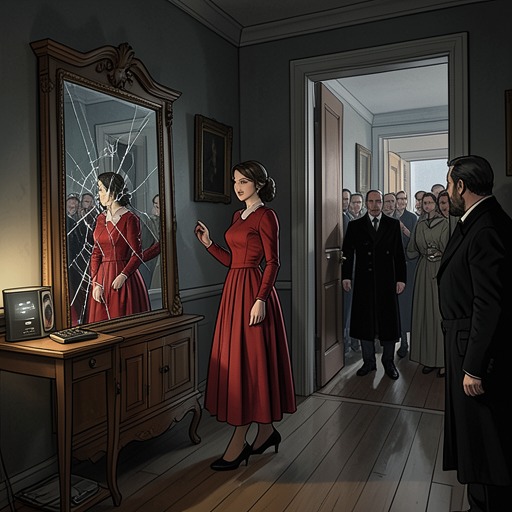
The Mirror Shatters
Back in her room, Carrie considered her body and the shame Margaret had attached to it. She had begun to understand that the changes of puberty were not evidence of evil, even as she remained frightened by the sensations and thoughts her mother had taught her to condemn.
Her reflection split when the small mirror suddenly cracked and fell. The break offered another sign that Carrie’s power was not confined to childhood memory or moments of conscious effort.
Friday night after the locker-room incident
Sue’s Remorse
After being intimate with [Tommy Ross](entity:character-recall-character-tommy-ross-18729385fa59), Sue Snell found herself thinking about the shower-room humiliation and began to cry. She recognized that she had joined the crowd and that the familiar reassurance that there had been no harm in it could no longer quiet her conscience.
Tommy did not excuse the cruelty. His question about what Carrie had ever done to Sue forced her to confront how little she knew the girl she had helped shame, and the ease with which popularity had made cruelty feel normal.
Monday morning after the shower-room incident
Desjardin Punishes the Girls
[Rita Desjardin](entity:character-recall-character-rita-desjardin-0daf6d303a4e) confronted the girls in the locker room and called their treatment of Carrie what it was: a cruel act. She singled out Chris, physically stopped her from leaving, and made clear that the school’s punishment would be a week of detention in the gym.
The girls were relieved that the administration had not imposed suspension or withheld prom tickets. Desjardin warned that skipping her detention would bring those harsher consequences, while Chris left vowing that the conflict was not over.
Monday after the locker-room confrontation
Grayle Confronts Morton
[Rita Desjardin](entity:character-recall-character-rita-desjardin-0daf6d303a4e) told assistant principal [Pete Morton](entity:character-recall-character-pete-morton-081a9f8dda9f) that the girls had thrown sanitary products at Carrie during her first period. She also named Chris and the other students involved, while admitting that her own reaction to Carrie had not been free of anger or disgust.
Morton understood the seriousness of what had happened, but the school administration chose a comparatively light punishment. Desjardin’s account made clear that the episode was not simply a disciplinary nuisance; it was an act of group degradation against a frightened student.
Friday after Chris skips detention
Hargensen Pressures the School
[John Hargensen](entity:character-recall-character-john-hargensen-5668df85d000) visited Principal [Henry Grayle](entity:character-recall-character-henry-grayle-32126096f1ad) to demand prom tickets for his daughter and the nonrenewal of [Rita Desjardin](entity:character-recall-character-rita-desjardin-0daf6d303a4e)’s contract. He framed the teacher’s physical restraint and profanity as grounds for legal action, leaving the shower-room abuse largely unaddressed.
Grayle answered with Chris’s extensive record of harassment and skipped detentions, then warned that the school could pursue a claim on Carrie’s behalf under the in loco parentis doctrine. Hargensen left without securing his demands, but Chris remained excluded from the prom and furious at the school.
the following week at Kelly Fruit Company
Chris and Sue Fall Out
Sue encountered Chris at the [Kelly Fruit Company](entity:location-recall-location-kelly-fruit-company-a0ebf99f10e3), where Chris complained that she had been barred from the prom and blamed Carrie for the school’s response. Sue refused to join in the renewed attack and said she had accepted punishment because the girls had done something shameful.
Chris reminded Sue that she had participated in the locker-room hazing. Sue admitted it but insisted that she had stopped. The exchange ended their easy alliance and left Sue more conscious of the gap between remorse and actual repair.
after the Kelly Fruit Company confrontation
Sue’s Atonement Plan
Sue decided that an apology alone would not answer the years of humiliation Carrie had endured. She asked [Tommy Ross](entity:character-recall-character-tommy-ross-18729385fa59) to invite Carrie to the Spring Ball in her place, hoping the gesture might give Carrie one experience of being welcomed rather than mocked.
Tommy challenged Sue’s assumptions about what the invitation could accomplish and whether Carrie would trust him. Sue acknowledged that she could not undo her part in the cruelty, but believed that someone should try to make amends in a way that mattered.
Thursday after Sue proposes the plan
Tommy Invites Carrie
Tommy approached Carrie after study hall and asked whether she would go to the Spring Ball with him. Carrie initially thought the invitation might be another trick and reminded him that she knew the people he spent time with.
Tommy told her he was asking because he wanted to. Carrie accepted, though she called the event a likely nightmare and seemed barely able to believe that the invitation was real. Her decision opened the possibility of a different place in the school’s social world.
the days before the Spring Ball
Carrie Practices Her Power
Carrie began exercising her telekinesis in private, first moving a hairbrush and then lifting the end of her bed. Each attempt demanded effort and left her heart pounding, but the power grew quickly as she repeated the exercises.
The practice gave Carrie a sense of agency she had never possessed. At the same time, the bodily strain warned that the ability was not cost-free, even as her control expanded beyond the small, accidental movements that had first frightened her.
the days before the Spring Ball
Carrie Remembers the Knife
As Carrie’s power strengthened, memories of the childhood stone incident returned in vivid detail. She recalled Margaret choking her and coming toward her with Ralph’s butcher knife, while household objects flew and stones struck the house.
Carrie now understood the stones as an eruption of her own power that had interrupted Margaret’s attempt to harm her. The recovered memory explained Margaret’s fear and showed Carrie that her mother had long suspected what she could do.
before the Spring Ball, as later reconstructed
Margaret’s Family History
Evidence gathered after the disaster traced Margaret’s family history to her parents’ roadhouse and her own rejection of what she considered their sinful lives. She met Ralph at a revival and insisted that their marriage would remain free of intercourse, though the surviving record suggests that the promise did not hold.
Margaret’s fear of sexuality was bound to her own history, including a possible earlier pregnancy loss and her belief that blood was divine punishment. Her daughter inherited a home in which the mother’s unacknowledged desires were recast as religious prohibitions.
the evening before the Spring Ball
Carrie Resists Margaret at Dinner
Carrie told Margaret that Tommy had invited her to the Spring Ball and that she had accepted. She argued that she needed to try to live among other people and become a whole person, rather than remain confined to her mother’s life.
Margaret threw tea in Carrie’s face, struck her, and ordered her to the closet, insisting that boys would follow the blood and lead her into sin. Carrie refused to yield. When Margaret tried to hit her again, a pan flew across the room and the teacup shattered, revealing the force Carrie could now summon deliberately.
the evening before the Spring Ball
Carrie Takes the Dress Material
After the confrontation, Carrie went to the cellar for the velvet she had bought to make her prom dress. She understood that Tommy’s invitation might be an act of atonement rather than affection, but chose to accept the chance to participate in the world beyond the [White house](entity:location-recall-location-white-house-83468f6b607d).
For Carrie, making the dress was an act of self-definition as well as preparation for a dance. The relief she felt at choosing for herself marked a break with Margaret’s claim to control every part of her life.
the week before the Spring Ball
Chris Finds the Seating Chart
While the [Spring Ball Decoration Committee](entity:organization-recall-organization-spring-ball-deco-93589c1ef06e) worked on the gym mural, Chris slipped into the committee office and examined the seating chart. She saw that Carrie and Tommy were assigned seats together and discovered that Carrie’s name had been added to the King and Queen ballot.
The information turned Chris’s resentment into a specific plan. She called [Billy Nolan](entity:character-recall-character-billy-nolan-d7b941f8a532), and the thought of Carrie being publicly crowned gave the intended humiliation a stage and an audience.
the night before the Spring Ball
The Pig-Blood Harvest
[Billy Nolan](entity:character-recall-character-billy-nolan-d7b941f8a532) drove with several friends to [Henty farm](entity:location-recall-location-henty-farm-5109e9355473), where they killed two pigs and collected their blood in metal pails. Chris had helped set the revenge in motion, but Billy treated the bloodshed as his own contribution to a joke designed to mark Carrie as a pig.
He packed the pails in ice and carried the blood away. The act converted Chris’s grievance into a physical trap and set in motion the most consequential prank of the night.
early Friday morning before the Spring Ball
Billy Sets the Trap
Billy entered the dark Ewen gym and used tools, pulleys, and twine to rig the buckets above the place where the King and Queen would sit. He marked the drop point on the stage apron and arranged the line so someone could release the blood from the loft.
He expected Carrie and Tommy to be beneath the buckets, but he was willing to drench any of the students. His careful concealment made the prank more than a spontaneous insult: it was a planned assault designed to turn the ceremony into public humiliation.
Spring Ball night, before the dance
Margaret Sharpens the Knife
As Carrie left for the dance, Margaret sat alone in the [White house](entity:location-recall-location-white-house-83468f6b607d) and convinced herself that the blood, the power, and the boy were signs of the Devil’s work. Memories of telekinetic behavior in her own grandmother strengthened her belief that Carrie’s ability was evil and hereditary.
Margaret took out the carving knife and sharpened it, imagining that blood could expiate sin. Her religious certainty was moving toward violence even as Carrie prepared to spend one evening outside the closed world Margaret had made for her.
May 27, 1979, early evening
Carrie Dresses for the Ball
Carrie put on the red velvet dress she had made and checked its fit without a full-length mirror. Margaret entered carrying Ralph’s Bible and condemned the color, the neckline, and the prospect of other people seeing Carrie’s body.
Margaret hurt herself in an attempt to force Carrie to abandon the dress, but Carrie did not change her mind. Using her power gently, she pushed her mother from the room and held the door shut, choosing to attend despite the fear and guilt that followed her to the threshold.
May 27, 1979, 7:30 p.m.
Tommy Arrives for Carrie
Tommy arrived at the [White house](entity:location-recall-location-white-house-83468f6b607d) in a white dinner jacket and told Carrie she was beautiful. Carrie had feared that the invitation was an elaborate joke, but his calm welcome allowed her to leave with him.
The brief exchange gave Carrie a first experience of being seen without immediate ridicule. Margaret remained shut away in the chapel, praying, while Carrie stepped into the evening she had decided to claim for herself.
May 27, 1979, shortly before 8:00 p.m.
Carrie Enters the Dance
At [Ewen High School](entity:location-recall-location-ewen-high-school-81fa067d8c34), classmates turned to stare as Carrie entered with Tommy. George Dawson traded familiar insults with Tommy, and Carrie surprised herself by joining the joking; Frieda complimented the dress, and Carrie began to feel some warmth among the other students.
At their table, Carrie answered [Norma Watson](entity:character-recall-character-norma-watson-cdf15b4d5c80)’s probing with an unexpected joke of her own. For a short time the evening seemed to offer what Carrie had hoped for: a chance to take part without being reduced to the school’s familiar target.
May 27, 1979, about 9:00 p.m.
Desjardin Apologizes
[Rita Desjardin](entity:character-recall-character-rita-desjardin-0daf6d303a4e) approached Carrie at the dance and told her that she looked beautiful. She apologized for the shower-room incident and made clear that she hoped Carrie could enjoy the evening.
Carrie accepted the kindness without pretending that the humiliation had vanished. She told Desjardin that the event was over but that she could not simply forget it, preserving the difference between a sincere apology and the erasure of harm.
May 27, 1979, shortly before 10:00 p.m.
The King and Queen Vote
Students cast ballots for the Spring Ball’s King and Queen. Carrie was startled to see herself paired with Tommy on the ballot, and Tommy encouraged her to vote for them rather than withdraw.
The first count tied Carrie and Tommy with another couple. Carrie’s fear of the attention grew, but the contest had already moved her from the margins into the center of the school’s ceremony.
May 27, 1979, shortly after 10:00 p.m.
Carrie and Tommy Win
A runoff gave Carrie and Tommy the victory by one vote. The audience applauded as the pair were crowned and seated on the stage, while the bands began the school song.
Carrie felt exposed beneath the bright lights but also believed, for a moment, that the applause might be genuine. Tommy held her hand, and the evening reached its most hopeful point just before Billy’s trap was sprung.
May 27, 1979, about 10:07 p.m.
Chris Pulls the Cord
Outside the gym, Billy told Chris to pull the cord when the school song began and warned her that the act could bring criminal consequences. Chris hesitated as the ceremony continued, then yanked the line with both hands.
The cord tightened and released the rig. The two buckets fell over the stage, turning a planned humiliation into a sudden deluge of pig blood that neither Chris nor Billy could control once it was set in motion.
May 27, 1979, moments after the coronation
The Pig-Blood Prank
Blood drenched Carrie and Tommy in front of the students and splashed the stage and band. One bucket struck Tommy on the head, leaving him unconscious and mortally injured; the crowd’s shock gave way to laughter as Carrie sat covered in blood.
Carrie experienced the scene as a repetition of the shower-room humiliation, now enlarged before the whole school. The laughter erased the brief welcome she had felt and pushed her beyond the point at which she could keep the power contained.
May 27, 1979, immediately after the blood falls
Carrie Flees the Gym
Carrie staggered off the stage and ran through the laughing crowd. She struck [Rita Desjardin](entity:character-recall-character-rita-desjardin-0daf6d303a4e) aside with her power when the teacher came toward her, then fell as someone stuck out a foot and crawled before she could get back up.
She escaped into the night barefoot and bleeding from her fall. The audience’s laughter followed her beyond the gym, but outside she began to recover enough to remember that she could act against those who had trapped her.
May 27, 1979, shortly after leaving the dance
Carrie Turns Back
On the lawn, Carrie considered returning home to Margaret and accepting the familiar life of confinement. The thought collapsed when she remembered how the closet, the prayers, and the years of humiliation would continue if she surrendered.
She recognized that she had already used her power against Desjardin and decided to make the students understand what they had done. Instead of disappearing into the dark, Carrie returned to the school with retaliation in mind.
May 27, 1979, around 10:25 p.m.
The Gym Becomes a Trap
Carrie slammed the gym doors shut with telekinetic force and turned on the [Ewen High sprinkler system](entity:object-recall-object-6a64dd3f6dcf). Students crowded toward the exits while water spread across the floor and the band’s electrical equipment remained energized.
Carrie remembered the cables and deliberately seized at the school’s power. Live wires struck the water, causing electrocution, fire, and chaos. Her initial wish to punish the crowd became a deadly chain reaction that she could no longer manage as a controlled act of revenge.
May 27, 1979, shortly after 10:25 p.m.
The School Catches Fire
The electrical disaster spread through the gym as equipment sparked, the mural burned, and students struggled to escape. Some reached the fire exits, while others remained trapped or fell in the water and live current.
Tommy died on the stage without understanding the full catastrophe around him. The fire reached the school’s oil tanks, and an explosion later destroyed much of the gymnasium wing, turning the prom into a mass-casualty disaster.
May 27, 1979, about 10:25 p.m.
Sue Hears the Whistle
At home, Sue Snell heard the town whistle and recognized that the signal meant a major emergency. She turned off the stove, went to the window, and saw the high school catch fire in the distance.
The sight transformed her unease about the night into certainty that something terrible had happened. She took her mother’s car and drove toward town, moving from the quiet domestic scene into the widening disaster.
May 27, 1979, after leaving the school
Carrie Opens the Hydrants
Carrie crossed [Chamberlain](entity:location-recall-location-chamberlain-dfde1fdd0c5d) while the town’s fire whistle sounded and opened hydrants with her mind. Water poured into the streets, but the action did not restore control; fires and electrical hazards continued to spread through the town.
The act marked a shift from the school’s concentrated violence to a town-wide catastrophe. Carrie’s route followed a wandering path through familiar places, while her thoughts remained fixed on making the people who had hurt her pay.
May 27, 1979, around 10:46 p.m.
The School Explosion
The fire at [Ewen High School](entity:location-recall-location-ewen-high-school-81fa067d8c34) intensified as students and staff struggled to escape. Carrie’s use of the power, the sprinkler water, and the electrical system contributed to the conditions inside the gym, while the oil tanks provided fuel for a tremendous explosion.
The blast sent debris into the night and confirmed that the prom disaster had become a town emergency. Firefighters arrived to find hydrants stripped of their nozzles and the school burning beyond their immediate ability to control it.
May 27, 1979, from about 10:46 p.m. onward
Chamberlain Burns
As the school burned, fires and explosions spread into downtown [Chamberlain](entity:location-recall-location-chamberlain-dfde1fdd0c5d). Gas stations, shops, and other buildings caught fire, while damaged hydrants and the loss of water pressure hindered attempts to fight the flames.
The disaster expanded from the prom to a large part of the town, killing students, residents, and rescuers. The scale of destruction overwhelmed the local emergency response and severed Chamberlain from the ordinary world of outside news and help.
May 27, 1979, late evening
Carrie’s Return Home
After moving through the streets, Carrie entered the [Carlin Street Congregational Church](entity:location-recall-location-carlin-street-congre-ad956e19f76f) and tried to pray. She found no comfort or answer there, and the energy of her power disturbed the sanctuary before she left and continued toward the [White house](entity:location-recall-location-white-house-83468f6b607d).
The failed prayer deepened her sense that the disaster could not be separated from the religious world Margaret had imposed on her. Carrie’s path remained fixed on home, where the conflict with her mother awaited its final reckoning.
May 27, 1979, near midnight
Margaret Reveals Her Past
At the [White house](entity:location-recall-location-white-house-83468f6b607d), Margaret waited with the carving knife. When Carrie arrived, Margaret spoke about her marriage to Ralph, the promises they made, and the night he took her after drinking. She admitted that she had experienced desire, a truth that contradicted the purity she had demanded of her daughter.
Margaret framed her history as proof that sin never dies and that Carrie must be sacrificed. The confession exposed the human shame beneath her religious language, but it did not soften her intention to kill her daughter.
May 27, 1979, shortly after midnight
Margaret Attacks Carrie
Margaret stabbed Carrie in the shoulder when Carrie knelt before her, believing her mother might pray with her. Carrie survived the blow and used her power to slow Margaret’s heart, telling her that darkness would be the gift she had always wanted.
Margaret prayed as her heart failed and died on the kitchen floor. The encounter completed the violent cycle between mother and daughter, while leaving Carrie severely wounded and emotionally shattered.
May 28, 1979, around 1:15 a.m.
Carrie Leaves the Burning House
Carrie pulled herself away from the [White house](entity:location-recall-location-white-house-83468f6b607d) with the knife still lodged in her shoulder. She crossed back yards and climbed toward Route 6, trying to remember what she had been meant to do and why she had to keep moving.
The house and much of [Carlin Street](entity:location-recall-location-carlin-street-982f75888c37) were burning behind her. Carrie was physically failing, but she continued toward [The Cavalier](entity:location-recall-location-the-cavalier-55c51401e66b), driven by the tangled remnants of Margaret’s ideas about sin and the Angel’s sword.
May 28, 1979, shortly after midnight
Chris and Billy Return
Chris and Billy returned to a room above [The Cavalier](entity:location-recall-location-the-cavalier-55c51401e66b) after the prom disaster began. [Jackie Talbot](entity:character-recall-character-jackie-talbot-c81c10b82280) told them that [Chamberlain](entity:location-recall-location-chamberlain-dfde1fdd0c5d) was burning and that people blamed Carrie; Billy admitted that he had arranged the pig-blood trap but insisted he would avoid responsibility.
Chris feared that the buckets could connect them to the catastrophe. Billy dismissed her concern, dressed, and planned to go into town, but the two conspirators were already caught in the consequences of the violence they had set in motion.
May 28, 1979, shortly after midnight
The Cavalier Car Crash
As Billy drove out with Chris, Carrie appeared in the headlights, bloodied and barely able to stand. Billy accelerated toward her, but the car turned against him under Carrie’s power and crashed into the side of [The Cavalier](entity:location-recall-location-the-cavalier-55c51401e66b).
The collision killed Billy and Chris and set the building alight. Carrie collapsed nearby, gravely wounded, having reached the place associated with the beginning of her parents’ sexual history and the night’s conspiracy.
May 28, 1979, about 2:00 a.m.
Sue Finds Carrie
After speaking with Sheriff [Otis Doyle](entity:character-recall-character-otis-doyle-8c8bc959b4bb), Sue followed an inexplicable sense of where Carrie had gone. She crossed the countryside toward [The Cavalier](entity:location-recall-location-the-cavalier-55c51401e66b), aware in a way she could not explain that Carrie was still alive and badly hurt.
Sue arrived at the burning building and found Carrie on the ground beside the wreckage. The girl who had once joined in the mockery now knelt beside its dying target, unsure whether compassion could make any difference.
May 28, 1979, around 2:00 a.m.
Sue’s Psychic Encounter
As Sue turned Carrie onto her back, the two girls communicated mind to mind. Carrie accused Sue of joining the long sequence of tricks, and Carrie’s power opened Sue’s memories to inspection, exposing her jealousy, selfishness, shame, and genuine lack of a plan to humiliate Carrie at the prom.
Sue felt Carrie’s pain and heard her longing for Margaret. She could not stop Carrie’s bleeding or withdraw from the shared awareness before the last thought faded, leaving Sue with the intimate knowledge of Carrie’s terror and death.
May 28, 1979, immediately after Carrie dies
Sue’s First Period
Sue stumbled away from the parking lot and ran into a misty field, trying to escape the fires, Tommy’s death, and the experience of sharing Carrie’s final thoughts. The mental connection had ended, but its emotional force remained with her.
As she stood alone, Sue felt menstrual blood running down her thighs. The book leaves the meaning of the moment open, linking Sue’s bodily experience to the puberty that had first awakened Carrie’s power and to the horror of what had just ended.
May 28, 1979, around 2:00 a.m.
Carrie’s Death Is Recorded
Carrie was pronounced dead after hemorrhage, shock, and probable heart failure. Sue Snell identified her body, and the record listed no next of kin because Margaret was also dead.
The official form reduced Carrie’s final hours to a time and medical cause, while the disaster continued to claim victims across [Chamberlain](entity:location-recall-location-chamberlain-dfde1fdd0c5d). Her death closed the immediate story but left the question of telekinesis and its recurrence unresolved.
June through September 1979
The Death Toll Climbs
Officials initially reported hundreds dead and dozens missing, and the toll continued to rise as more bodies were recovered. The school, downtown businesses, residential streets, and gas mains had all been struck by fire or explosion.
[Chamberlain](entity:location-recall-location-chamberlain-dfde1fdd0c5d)’s economy and social life collapsed under the loss. Businesses closed, families left, and the town’s ordinary landmarks became reminders of the dead, making the disaster not only a single night of violence but a prolonged civic wound.
September 1979
The Town’s Aftermath
A newspaper account described a town still standing at its edges but blackened at its center. Many residents were preparing to leave, the mill was reducing operations, and the survivors had little appetite for rebuilding or returning to familiar routines.
Funerals remained [Chamberlain](entity:location-recall-location-chamberlain-dfde1fdd0c5d)’s dominant public activity. The losses of students, neighbors, and emergency workers made recovery feel uncertain, and the town’s physical damage became inseparable from the grief and guilt of those who had survived.
June 1979
Desjardin and Grayle Resign
[Henry Grayle](entity:character-recall-character-henry-grayle-32126096f1ad) resigned, believing that greater foresight might have prevented the disaster. [Rita Desjardin](entity:character-recall-character-rita-desjardin-0daf6d303a4e) returned her teaching contract and wrote that she could not teach again while wondering whether she might have reached Carrie more effectively.
Their departures expressed the survivors’ search for responsibility in a catastrophe that no one had understood in time. The school’s earlier failure to protect Carrie from bullying remained part of the moral wreckage left behind.
after the disaster in 1979
The Commission Questions Sue
The State Investigatory Board questioned Sue about how she found Carrie at [The Cavalier](entity:location-recall-location-the-cavalier-55c51401e66b). Sue resisted repeated attempts to turn her account into a contradiction or a conspiracy, pointing out that other witnesses had also described simply knowing where Carrie was.
She insisted that Carrie had been dying when she found her and rejected the idea that she had orchestrated the events. Her testimony exposed the limits of the investigators’ framework: even as they documented telekinetic acts, they struggled to accept the strange knowledge that accompanied them.
1980
The White Commission Debates TK
The [White Commission](entity:organization-recall-organization-white-commission-922ae480de7a) assembled accounts of the prom, the fires, and Carrie’s movements through [Chamberlain](entity:location-recall-location-chamberlain-dfde1fdd0c5d). Its report treated the pig-blood plot and the school’s electrical catastrophe as central to the night while leaving wider questions about telekinesis unsettled.
Scientific and public explanations competed over whether Carrie’s ability was a genetic trait, a one-time anomaly, or a phenomenon better dismissed. The official effort to contain the event in a report could not resolve the fear that another person might possess the same power.
1986
Susan Publishes Her Account
In [My Name Is Susan Snell](entity:object-recall-object-my-name-is-susan-snell-49b50512e566), Sue challenged the public’s tendency to turn the [Chamberlain](entity:location-recall-location-chamberlain-dfde1fdd0c5d) disaster into a symbol and forget that the people involved had been young. She acknowledged her own complicity in the shower-room hazing while arguing that adolescent cruelty still caused real harm.
Her account defended Tommy’s decision to take Carrie to the dance and rejected the theory that he had knowingly participated in a plot. Sue remained unwilling to call the evening a simple act of redemption, but hoped that Carrie had experienced some happiness before the terror began.
1981 and the years afterward
The TK Warning
Researchers argued over whether telekinesis was inherited and whether a test could identify children likely to develop it at puberty. Some called for surveillance or control, while others recognized that a positive result would offer no treatment and might lead to the imprisonment of a child.
The debate left the central danger unanswered: a person with such power might not be containable, yet the possibility of another Carrie could not be dismissed. Public confidence in the official claim that [Chamberlain](entity:location-recall-location-chamberlain-dfde1fdd0c5d) was a fluke remained fragile.
May 3, 1988
Annie’s Marbles Move
In a letter to her sister, Amelia Jenks described watching her two-year-old niece Annie play with marbles that moved and rose without being touched. The child laughed while Amelia felt frightened by the sight.
Amelia connected the movement to memories of her grandmother’s similar abilities and worried about the family history of heart trouble. The letter’s modest domestic detail suggested that Carrie’s power might not have died with her, leaving the novel’s final possibility quietly open.